



















Losing weight on a vegan or vegetarian diet
This article is general information, not medical advice. Talk to your doctor or a registered dietitian before changing your diet, especially if you have a health condition, take medication, or are pregnant or breastfeeding. Disclosure: Kalomo AI makes a calorie-tracking app, which we mention at the end of this article.
The short answer
Vegan and vegetarian diets can support weight loss: in trials, people assigned to them lost a little more weight than those on comparison diets, about 2 kg on average over a few months. The effect comes from eating fewer calories, often helped by fiber-rich, filling foods, and a well-planned diet needs reliable sources of protein, vitamin B12, iron and calcium.
Vegan, vegetarian and plant-based: what's the difference?
A vegetarian diet leaves out meat, poultry and fish. Most vegetarians still eat eggs and dairy, and for them a healthy diet looks much the same as for anyone else (NHS). A vegan diet goes further and leaves out all animal products, including eggs and dairy (NHS).
“Plant-based” is a looser term for eating that is mostly built on vegetables, fruit, whole grains, legumes, nuts and seeds. Going meatless doesn't automatically mean eating healthily or losing weight, though. Fries, pastries and soda are all vegan.
Why a plant-based diet can help with weight
Weight loss still comes down to energy balance. You are likely to lose weight if you eat and drink fewer calories than you use (NHS). Plant-based diets can make that easier because meals built on vegetables, legumes and whole grains tend to be high in fiber and lower in saturated fat (Melina et al., 2016).
Calories still count, though. Nuts, nut butters, oils, cheese, baked goods and fried snacks are easy to overeat on any diet. Our calorie guide explains how to estimate your daily needs and read portion sizes.
How to build meals that keep you full
- Put a protein in every meal. Beans, lentils, chickpeas and peas are especially important when you don't eat meat, fish or dairy (NHS). Tofu, tempeh, eggs and Greek yogurt (if you eat them) also help.
- Mix your protein sources across the day to get a full range of amino acids (NHS).
- Fill half the plate with vegetables, and aim for the WHO's minimum of 400 g of fruit and vegetables a day (WHO).
- Choose whole grains like oats, brown rice and whole-wheat bread over refined versions.
- Measure the calorie-dense extras: oil, nuts, seeds and cheese are healthy in moderation but add up fast.
- Watch meat substitutes and snack foods, which can be high in salt. WHO's adult limit is under 5 g of salt a day (WHO).
Nutrients to plan for
A well-planned vegetarian or vegan diet can meet your nutrient needs, but a few nutrients need attention (NHS; Melina et al., 2016):
- Vitamin B12: found naturally only in animal products. Vegans need fortified foods or a supplement (NHS; Melina et al., 2016).
- Iron: iron from plants is absorbed less well. Pair pulses such as beans and lentils, fortified cereals and dark greens with a source of vitamin C, and avoid tea or coffee with meals (NHS).
- Calcium: without dairy, use fortified unsweetened plant drinks, calcium-set tofu, sesame seeds and tahini (NHS).
- Vitamin D: the NHS advises everyone to consider a daily supplement in fall and winter (NHS).
- Omega-3 fats: walnuts, chia seeds, ground flaxseed and canola (rapeseed) oil are plant sources (NHS).
- Iodine and selenium can also be harder to get on a vegan diet (NHS).
Pros and cons
Pros: vegetarians and vegans have a lower risk of heart disease, type 2 diabetes, high blood pressure and obesity, and plant-based diets are typically higher in fiber and lower in saturated fat (Melina et al., 2016). In weight-loss trials, they performed slightly better than comparison diets (Huang et al., 2016).
Cons: a poorly planned vegan diet can fall short on B12, iron, calcium, vitamin D, iodine and omega-3 fats (NHS). Eating out can take more planning, and “vegan” processed foods aren't automatically low in calories or salt.
Who should get advice first
Well-planned vegetarian and vegan diets are considered suitable for all stages of life (Melina et al., 2016), but some groups need more careful planning:
- Pregnant or breastfeeding women, who need enough vitamins and minerals for the baby to develop healthily (NHS)
- Babies, children and teens, who need a wide range of foods for growth (NHS)
- People on diabetes or blood pressure medication, whose doses may need to change as diet and weight change; check with your doctor
- People with kidney disease, whose dietary limits should be set by their care team
- Anyone with a history of disordered eating, where cutting out food groups is best done with professional support
What the evidence says
A meta-analysis of 12 randomized trials with 1,151 people found that those assigned to vegetarian diets lost about 2 kg more than those on non-vegetarian diets over a median of 18 weeks. Vegan diets showed a somewhat larger effect (about 2.5 kg). The difference was smaller in studies lasting a year or more, and the authors called for longer trials (Huang et al., 2016).
The Academy of Nutrition and Dietetics concludes that appropriately planned vegetarian and vegan diets are healthful and nutritionally adequate, with vegans needing a reliable source of vitamin B12 (Melina et al., 2016).
So a plant-based diet is a reasonable, well-supported way to eat while losing weight, but it isn't magic. The extra weight loss in trials is modest, and the results depend on what's actually on the plate.
A sample day
A simple meatless day using dishes from our database. It's on the light side for protein, so add beans, lentils, tofu or soy milk where you can.
- BreakfastOatmealMade with water; top with berries and ground flaxseed, or cook with fortified soy milk for extra protein.154 kcal1 bowl
- LunchPeanut butter and jelly sandwichVegan and quick; whole-grain bread adds fiber.361 kcal1 sandwich
- DinnerTomato soupLight on its own; stir in white beans or lentils to make it a meal.48 kcal1 bowl
- SideAvocado toastWhole-wheat toast with avocado and olive oil.280 kcal1 slice
Frequently asked questions
Will I automatically lose weight if I go vegan?
Not automatically. Trials show a modest average advantage, about 2.5 kg for vegan diets over a few months, but weight still depends on total calories (Huang et al., 2016; NHS).
How do vegetarians get enough protein?
From legumes such as beans, lentils and chickpeas, plus soy foods, nuts, seeds, and for many vegetarians eggs and dairy. Eating a variety of sources gives you a full range of amino acids (NHS).
Do vegans need to take B12?
Vegans need a reliable source of vitamin B12, either fortified foods or a supplement, because it isn't found naturally in plant foods (Melina et al., 2016; NHS).
Is a vegetarian diet safe during pregnancy?
It can be, with planning to make sure you get enough vitamins and minerals for the baby's development. Check the NHS pregnancy vitamin advice and talk to your midwife or doctor (NHS).
Sources
- Vegetarian Diets and Weight Reduction: a Meta-Analysis of Randomized Controlled Trials — Journal of General Internal Medicine (PMC, NIH)
- Position of the Academy of Nutrition and Dietetics: Vegetarian Diets — Journal of the Academy of Nutrition and Dietetics (PubMed, NIH)
- The vegan diet — NHS
- The vegetarian diet — NHS
- Healthy diet — World Health Organization
- Understanding calories — NHS
Related articles
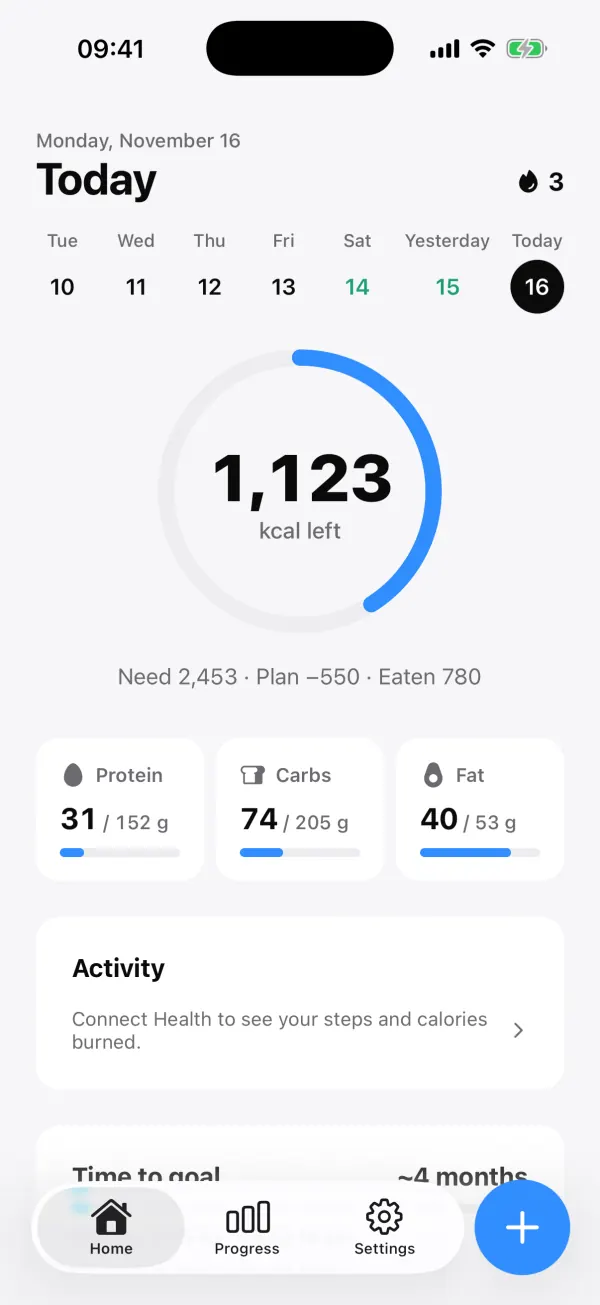
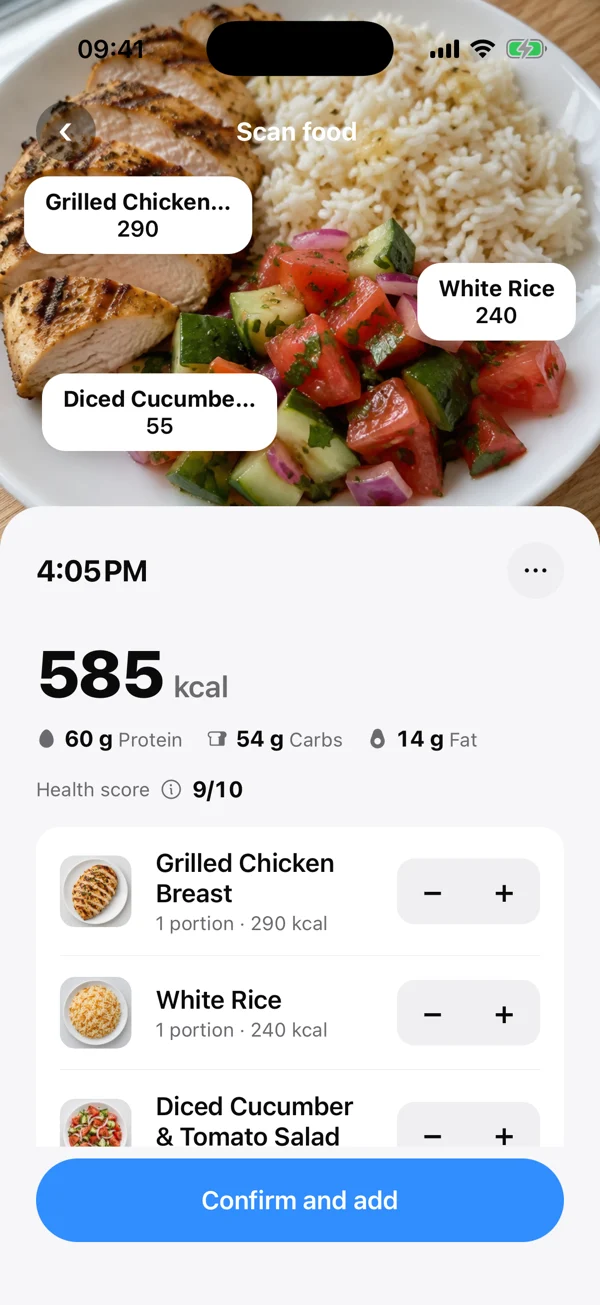
Track your plan with Kalomo AI
Snap a photo of your plate and get calories and macros in your log in seconds.