



























Portion control and the plate method
This article is general information, not medical advice. Talk to your doctor or a registered dietitian before changing your diet, especially if you have a health condition, take medication, or are pregnant or breastfeeding. Disclosure: Kalomo AI makes a calorie-tracking app, which we mention at the end of this article.
The short answer
Portion control means paying attention to how much you eat rather than banning foods. The plate method makes it visual: fill half your plate with vegetables and fruit, a quarter with whole grains and a quarter with healthy protein. Good evidence shows people eat more when they're served more, so shrinking portions is one of the lowest-effort ways to cut calories.
What portion control actually means
A portion is how much food you choose to eat at one time. A serving size is the amount listed on the Nutrition Facts label, and the two often don't match. The National Institute of Diabetes and Digestive and Kidney Diseases points out that a label's serving size isn't a recommendation for how much you should eat or drink (NIDDK).
Portion control is simply noticing that gap and choosing your amount on purpose. Nothing is off-limits and you don't have to log every bite, which is why it works as a starting point for people who are tired of strict diet rules.
How the plate method works
One of the best-known versions is the Healthy Eating Plate from the Harvard T.H. Chan School of Public Health (Harvard T.H. Chan):
- Half the plate: vegetables and fruits. Potatoes don't count as vegetables on this plate.
- A quarter: whole grains instead of refined grains like white bread and white rice.
- A quarter: healthy protein, like fish, poultry, beans or nuts, with red meat limited and processed meat avoided.
- Healthy oils such as olive or canola in moderation, and water, tea or coffee with little or no sugar; keep juice to one small glass a day and dairy to one or two servings.
Other plate guides
The UK's official Eatwell Guide splits things a little differently: fruit and vegetables make up just over a third of what you eat each day, starchy foods like potatoes, bread, rice and pasta another third or so, with smaller shares for protein foods, dairy and oils. It also says balance can happen over a day or a week rather than at every meal (NHS).
The guides agree on the basics: produce and fiber-rich starches take up most of the plate, while foods high in fat, salt and sugar are occasional extras. The World Health Organization adds a concrete target of at least 400 grams of fruits and vegetables a day for everyone over age 10 (WHO).
How to do it: practical tips
A few habits make the plate method stick, at home and when you're eating out.
- Load the vegetables first. Fill half the plate with salad, roasted vegetables or greens before anything else goes on.
- Eat from a plate, not the bag. Take one serving based on the label and put it on a plate rather than eating straight from the box (NIDDK).
- Use smaller dishes and slow down (NIDDK).
- Pre-portion bulk snacks. Split big bags of nuts, chips or crackers into single-serving containers (NIDDK).
- Measure for a couple of weeks. Use a measuring cup on rice, pasta and cereal until you know what a reasonable amount looks like. Our calorie guide shows calories per typical portion for common dishes.
- Count your drinks. Sugary drinks don't sit on the plate, so they're easy to overlook; water, tea or coffee are the default picks (Harvard T.H. Chan).
How it ties into calories and macros
Portion control is a way to create a calorie deficit without counting. Energy intake needs to balance energy expenditure (WHO); eat a bit less and that balance tips toward weight loss.
The plate also gives you a rough macro split without any math: the vegetable half brings fiber and volume, the protein quarter helps you feel full, and capping grains at a quarter keeps starch in check. The catch is fat: frying, creamy sauces and butter can pile on calories without changing how the plate looks, which is why the Harvard plate calls for healthy oils in moderation (Harvard T.H. Chan).
Pros and cons
Pros: It's free, simple, doesn't ban any food group and works at a family dinner table. You don't need a scale or an app. Because it mirrors official dietary guidance, it can turn into a long-term habit rather than a short-term diet (NHS).
Cons: Eyeballing makes it easy to miss calories from oil, dressing and sauces. A bigger plate means bigger quarters. Mixed dishes like lasagna, casseroles or burritos are hard to divide. And at restaurants, the kitchen decides your portion, not you.
Who should be careful
For most adults this is a low-risk approach, but check with a health professional first if any of these apply:
- Kidney disease. Protein needs can change with CKD, so the protein quarter may need adjusting with your doctor or dietitian (NIDDK).
- Diabetes or blood-pressure medication. Talk to the clinician managing your treatment before cutting portions significantly.
- Pregnancy or breastfeeding. Energy needs go up; get guidance before aiming for smaller portions.
- A history of eating disorders. Constant measuring and restricting can be a trigger.
- Children and teens. Their needs vary with age and growth; ask a pediatrician rather than shrinking an adult plate.
What the evidence says
The strongest data are about portion size itself. A Cochrane review of 58 studies with more than 6,600 participants found that people consistently eat and drink more when offered larger portions; the evidence was rated moderate quality, and the effect was larger in adults than in children (Cochrane). So serving yourself less is a sensible way to eat less.
Plate guides, on the other hand, are presented by public health bodies as everyday eating guides, not as tested weight-loss programs (Harvard T.H. Chan, NHS). How much weight you lose depends on the deficit you create and how long you can keep it going.
A sample day
A plate-method day built from dishes on our site, using their standard portions. Dinner is shown as one plate split into its three sections.
- BreakfastOatmeal1 bowl, about 154 kcal; top with berries for part of the day's fruit.154 kcal1 bowl
- LunchTurkey sandwich1 sandwich, about 428 kcal and 28 g protein; add a side salad to fill out the plate.428 kcal1 sandwich
- Dinner: half the plateCollard greens1 cup, about 109 kcal; add more vegetables if the half looks thin.109 kcal1 cup
- Dinner: protein quarterBaked salmon1 fillet, about 466 kcal and 43 g protein; counts toward weekly fish.466 kcal1 fillet
- Dinner: starch quarterBaked potato1 potato, about 250 kcal; Eatwell counts potatoes as a starchy food, so keep it to the quarter.250 kcal1 potato
Frequently asked questions
Do potatoes count as a vegetable on the plate?
Not on the Harvard plate (Harvard T.H. Chan). The UK Eatwell Guide also puts potatoes in the starchy foods group (NHS), so they belong in the grains-and-starch quarter.
Does using a smaller plate really help?
NIDDK recommends smaller plates and bowls as one way to manage portions (NIDDK). The stronger evidence is about portion size itself: when more is put in front of us, we eat more (Cochrane).
Is portion control the same as counting calories?
Not quite. Calorie counting means weighing and logging; portion control works with proportions and amounts. They pair well: start with the plate method and check unfamiliar dishes in our calorie guide.
Does every meal have to match the plate?
No. The Eatwell Guide says the balance can be spread across a day or a week (NHS). Breakfast can look different; the overall pattern is what counts.
Sources
- Healthy Eating Plate — Harvard T.H. Chan School of Public Health, The Nutrition Source
- The Eatwell Guide — NHS
- Food Portions: Choosing Just Enough for You — NIDDK (National Institutes of Health)
- Portion, package or tableware size for changing selection and consumption of food, alcohol and tobacco — Cochrane
- Healthy diet (fact sheet) — World Health Organization
- Healthy Eating for Adults with Chronic Kidney Disease — NIDDK (National Institutes of Health)
Related articles
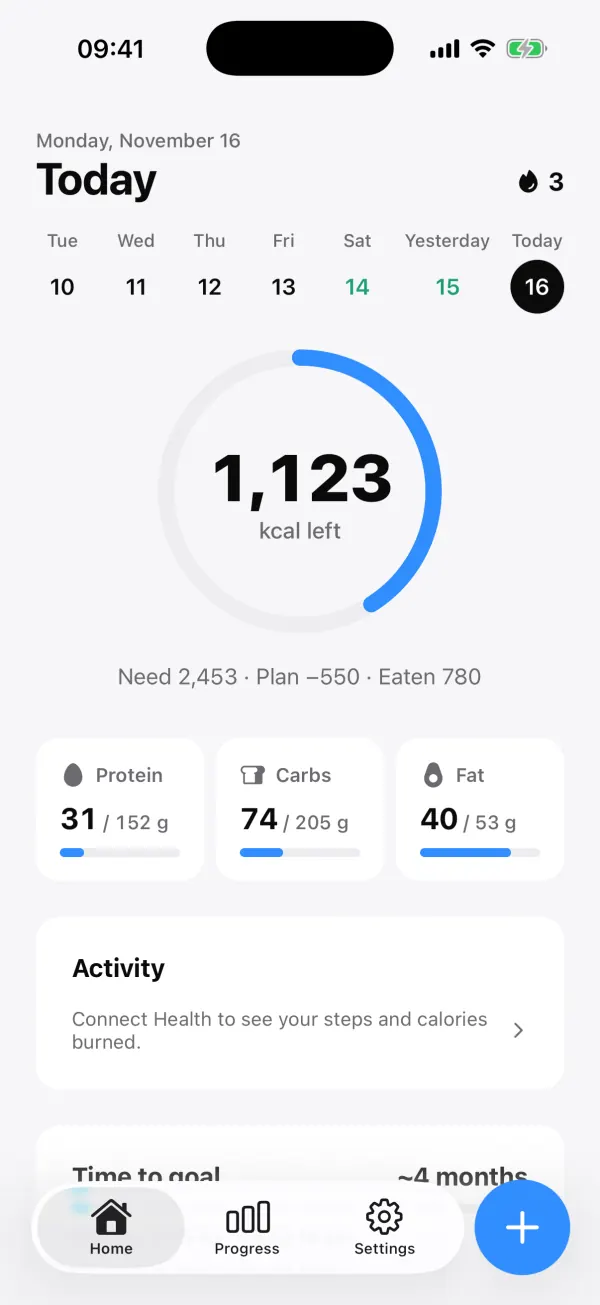
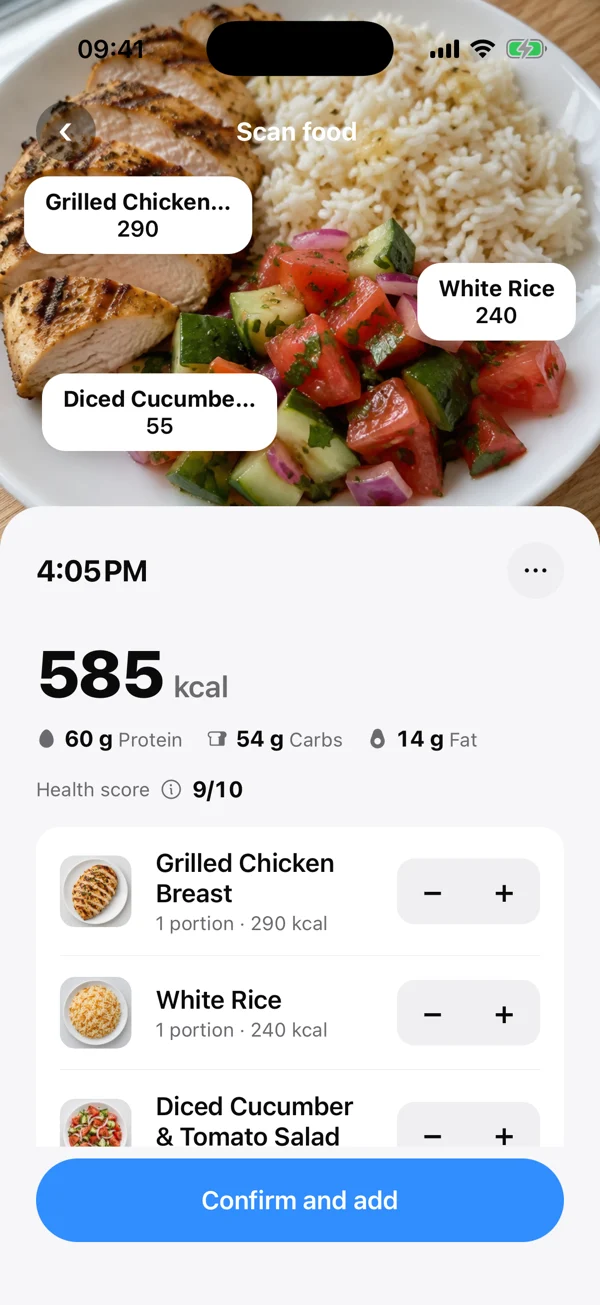
Track your plan with Kalomo AI
Snap a photo of your plate and get calories and macros in your log in seconds.