
























The high-protein diet: how much protein do you need?
This article is general information, not medical advice. Talk to your doctor or a registered dietitian before changing your diet, especially if you have a health condition, take medication, or are pregnant or breastfeeding. Disclosure: Kalomo AI makes a calorie-tracking app, which we mention at the end of this article.
The short answer
Most adults need at least 0.8 grams of protein per kilogram of body weight a day; high-protein weight-loss diets typically aim for about 1.2–1.6 g/kg. Paired with a calorie deficit, eating more protein leads to slightly more fat loss, better muscle retention and a bit more fullness, but the effect is modest and where your protein comes from matters as much as how much. If you have kidney disease, talk to your doctor before raising your protein.
What counts as a high-protein diet?
There's no single official “high-protein diet.” The term usually means building meals around protein foods and eating well above the basic recommendation, often trimming carbs or fat to make room while keeping calories the same or lower.
The baseline: the National Academy of Medicine recommends a minimum of 0.8 g of protein per kilogram of body weight per day (just over 7 grams for every 20 pounds), and protein can make up anywhere from 10–35% of calories (Harvard T.H. Chan). For a 150-pound (68 kg) adult, 0.8 g/kg works out to roughly 54 grams. That number is a floor to prevent deficiency, not a target to maximize results.
In weight-loss research, “higher protein” generally means about 1.2–1.6 g/kg per day (Leidy et al., 2015). For people who lift weights regularly, a sports nutrition position stand considers 1.4–2.0 g/kg sufficient for most (ISSN, 2017).
How it works
Protein doesn't burn fat on its own. You still lose weight by eating fewer calories than you use. What protein seems to do is make that deficit easier to live with and protect muscle while you're in it.
A meta-analysis of 24 calorie-matched trials with 1,063 participants found that high-protein, low-fat diets produced on average 0.79 kg (about 1.7 lb) more weight loss and 0.87 kg more fat loss than standard-protein diets, with less loss of lean mass and a smaller drop in resting energy expenditure. Three of five studies that measured it reported greater fullness (Wycherley et al., 2012). Real, but small.
The fullness effect is modest too. Higher-protein meals raise perceived fullness and satiety hormones, but the evidence doesn't show people reliably eat less at their next meal (Leidy et al., 2015).
How to do it: practical steps
The goal is a protein source at every meal, with the rest of the plate still built from vegetables, beans and whole grains.
- Find your number. Multiply your weight in kilograms by 0.8 for the minimum. If you're healthy and trying to lose weight, 1.2–1.6 g/kg is the range studied (Leidy et al., 2015).
- Spread it out. Rather than loading it all into dinner, split protein across breakfast, lunch and dinner. For active people, 20–40 grams per meal is a common guide (ISSN, 2017).
- Look at the whole package. Fish, poultry, eggs, yogurt, beans, lentils and nuts are good picks. Limit red meat and avoid processed meats like bacon, cold cuts and hot dogs (Harvard T.H. Chan).
- Add beans. About one daily serving of beans, chickpeas, lentils or peas can increase fullness and adds fiber (Harvard T.H. Chan).
- Keep an eye on calories. Adding protein on top of everything else raises total intake and slows weight loss. Check calories and protein for common dishes in our calorie guide.
How it fits with calories and macros
A high-protein diet is a choice about macro split, not a way around calories. Eat less energy than you burn and you lose weight; protein's job is to help you stick with that deficit while keeping muscle.
Protein can be 10–35% of calories (Harvard T.H. Chan). When you push protein up, the most sensible swap is usually refined carbs and sugary drinks. Cutting out fruit and whole grains instead costs you fiber, vitamins and minerals.
Pros and cons
Pros: Helps preserve muscle during a calorie deficit, gives a small edge in fat loss and can lower triglycerides a bit more (Wycherley et al., 2012). Feeling fuller may make a diet easier to follow, and in studies, sticking with the plan is what drives the results (Leidy et al., 2015).
Cons: Getting your protein from red and processed meat is linked to a higher risk of heart disease, type 2 diabetes and some cancers. High-protein, low-carb plans that drop fruit and whole grains can leave you short on fiber and micronutrients (Harvard T.H. Chan). And longer-term trials are less clear-cut than short, tightly controlled ones (Leidy et al., 2015).
Who should not do it (or should check first)
This isn't the right approach for everyone. Don't raise your protein on your own if any of these apply:
- Chronic kidney disease. Some people with CKD need moderate protein so waste doesn't build up, while people on dialysis may need more. Your doctor or dietitian should set the amount (NIDDK).
- Pregnancy or breastfeeding. Needs change; plan any diet shift with your prenatal or postpartum care team.
- Diabetes or blood-pressure medication. Talk to the clinician managing your treatment before changing your meal pattern or macro split.
- A history of eating disorders. Rule-heavy, gram-counting plans can be a trigger.
- Children and teens. Growing bodies need diets planned with a professional.
What the evidence says
Short, tightly controlled feeding studies consistently show more fat loss and better muscle retention with higher protein. Longer studies are mixed, and much of the benefit shows up only in people who actually stick with the diet (Leidy et al., 2015).
In the meta-analysis, fasting blood sugar, insulin, blood pressure and cholesterol changed about the same on either diet (Wycherley et al., 2012). For long-term health, the source of protein looks more important than the amount: diets rich in beans, nuts and fish are tied to better outcomes than diets heavy in red and processed meat (Harvard T.H. Chan).
More protein is a reasonable tool for making a calorie deficit easier. It isn't magic, and more isn't automatically better.
A sample day
A high-protein day built from dishes on our site, using their standard portions. The listed dishes add up to roughly 920 kcal and 96 g of protein, so this isn't a complete day's energy. Add fruit, yogurt, whole grains or snacks to match your own needs.
- BreakfastScrambled eggs2 eggs, about 218 kcal and 14 g of protein; add fruit on the side.218 kcal2 eggs
- LunchChili1 bowl, about 295 kcal and 25 g of protein, with beans for fiber.295 kcal1 bowl
- DinnerGrilled chicken breast1 breast, about 299 kcal and 50 g of protein.299 kcal1 breast
- Dinner sideCollard greens1 cup, about 109 kcal and 7.5 g of protein; fills the vegetable half of the plate.109 kcal1 cup
Frequently asked questions
How much protein do I need per day?
The minimum for adults is 0.8 g per kilogram of body weight (Harvard T.H. Chan). High-protein weight-loss diets in research use about 1.2–1.6 g/kg (Leidy et al., 2015). If you have kidney disease, your doctor should set your target.
Is a high-protein diet bad for your kidneys?
People with chronic kidney disease may need to adjust their protein, so they shouldn't increase it without guidance (NIDDK). If you're not sure how your kidneys are doing, get checked before you start.
Do I need protein powder?
No. Whole foods can cover your needs; powders are simply a convenient option (ISSN, 2017). Eggs, yogurt, fish, chicken and beans work for most people.
Does high protein mean no carbs?
No. Dropping fruit and whole grains means losing fiber, vitamins and minerals (Harvard T.H. Chan). Cutting back on refined carbs and sugary drinks first is a more balanced route.
Sources
- Protein — Harvard T.H. Chan School of Public Health, The Nutrition Source
- Effects of energy-restricted high-protein, low-fat compared with standard-protein, low-fat diets: a meta-analysis of randomized controlled trials (Am J Clin Nutr, 2012) — PubMed / NCBI
- The role of protein in weight loss and maintenance (Am J Clin Nutr, 2015) — PubMed / NCBI
- International Society of Sports Nutrition Position Stand: protein and exercise (2017) — PMC / NCBI
- Healthy Eating for Adults with Chronic Kidney Disease — NIDDK (National Institutes of Health)
Related articles
Track your plan with Kalomo AI
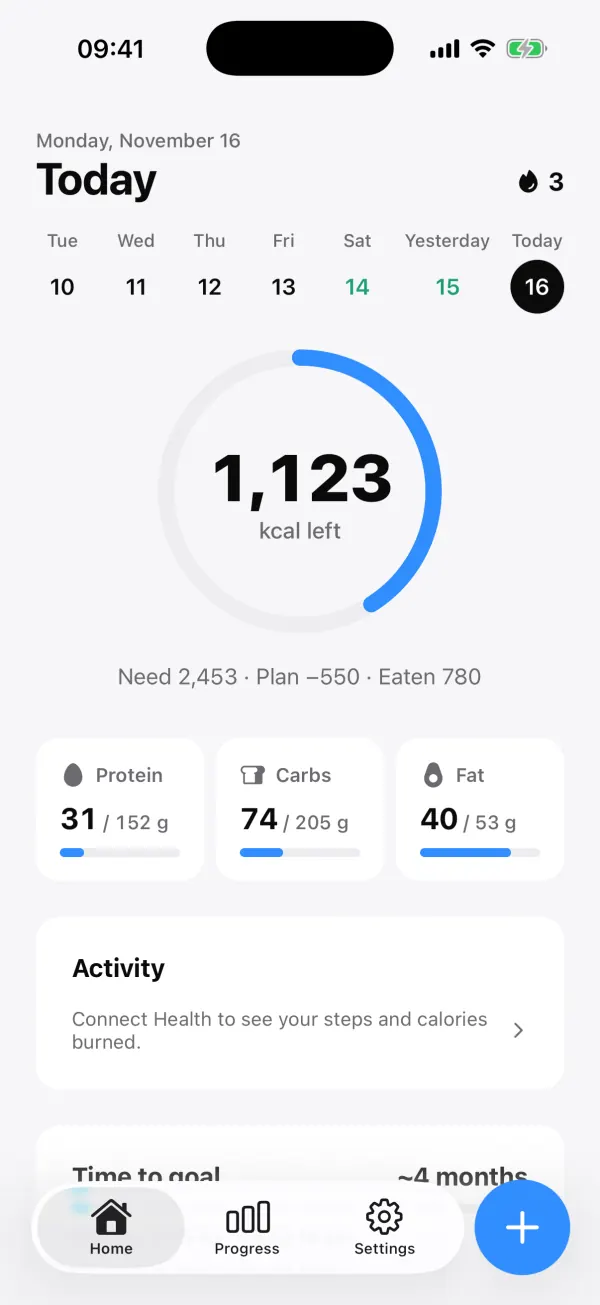
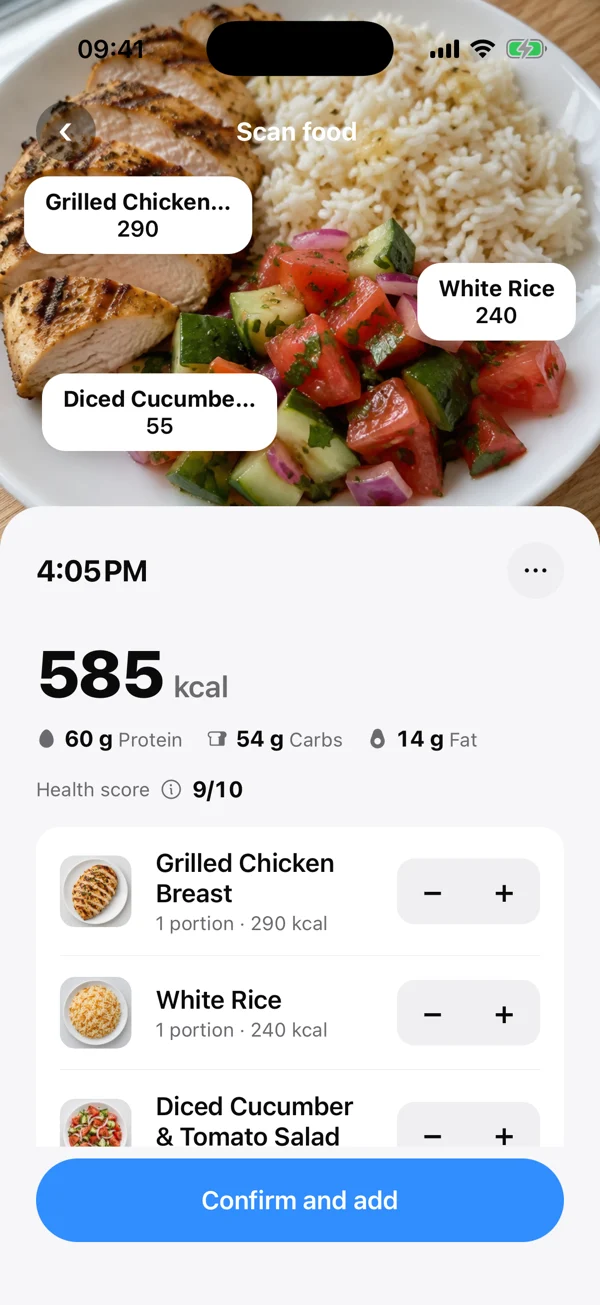
Snap a photo of your plate and get calories and macros in your log in seconds.