

































Intermittent fasting: what it is and how to do 16:8
This article is general information, not medical advice. Talk to your doctor or a registered dietitian before changing your diet, especially if you have a health condition, take medication, or are pregnant or breastfeeding. Disclosure: Kalomo AI makes a calorie-tracking app, which we mention at the end of this article.
The short answer
Intermittent fasting is a way of eating that sets when you eat rather than what you eat; with the popular 16:8 method you eat within an 8-hour window and fast for the other 16 hours. It can help with weight loss, but trials show it isn't clearly better than ordinary calorie cutting when calories are matched. It isn't a good fit for everyone, including people who are pregnant, have diabetes or have a history of disordered eating.
What intermittent fasting is
Intermittent fasting is a family of eating schedules, not one diet. The National Institute on Aging groups them into time-restricted eating (meals within a limited number of hours, such as 6–8, each day), alternate-day fasting (eating freely one day and little or nothing the next), the 5:2 pattern (five unrestricted days and two low-calorie days each week) and longer periodic fasts (NIA).
16:8 is the best known: fast for 16 hours, eat within 8. Cleveland Clinic calls it a good starting point because overnight sleep already covers much of the fast, and gives 11 a.m. to 7 p.m. as a common window (Cleveland Clinic).
How to do 16:8
When you're starting out, consistency matters more than strict rules. These steps are based on Cleveland Clinic's dietitian guidance (Cleveland Clinic):
- Pick a window that fits your life, such as noon to 8 p.m. or 11 a.m. to 7 p.m., and try to keep the same hours every day.
- Start your fast at least three hours before bed so a good chunk of it happens while you sleep.
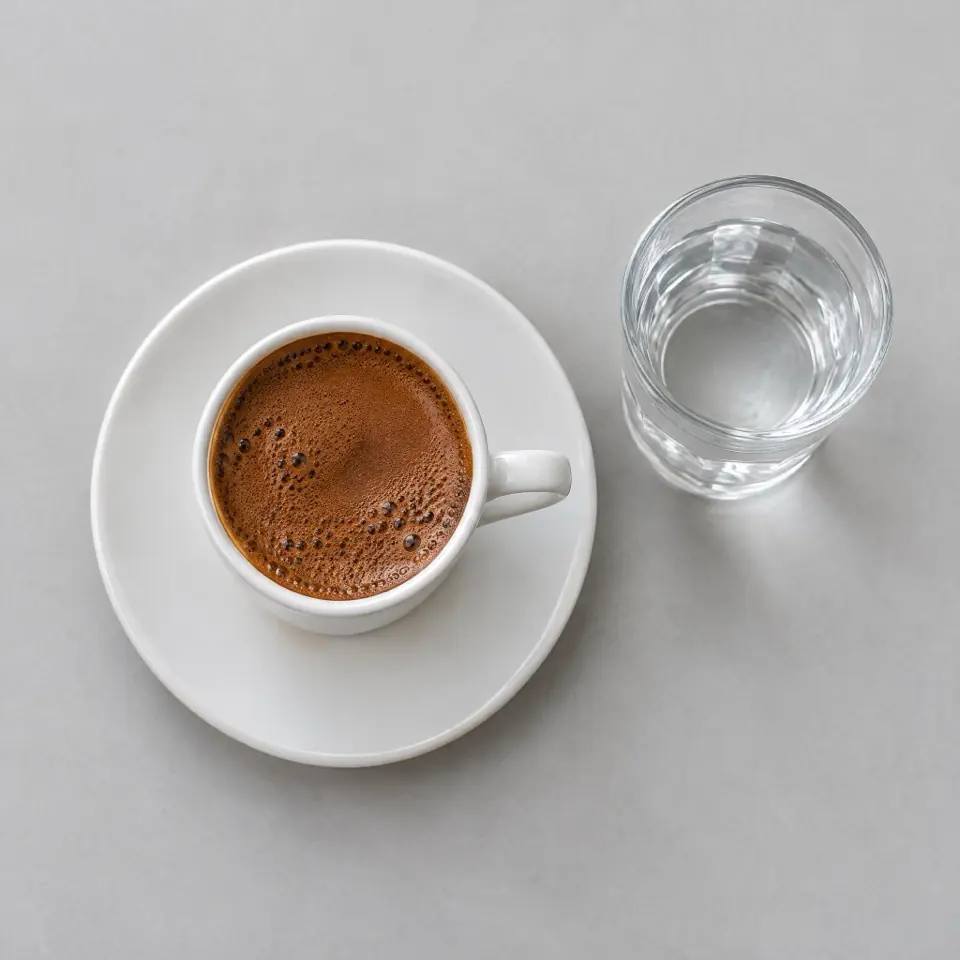
- Stick to zero-calorie drinks while fasting: water, sparkling water, black coffee, unsweetened tea. Go easy on artificial sweeteners.
- If you feel lightheaded or tired, consider electrolytes.
- If you take medication, ask your doctor before you start whether the timing needs to change.
- If 16 hours feels like a stretch, begin with a wider window like 14:10 and narrow it as you adjust.
How it relates to calories and macros
Intermittent fasting doesn't make you count calories, but its effect on weight still runs mostly through them. As the NIA notes, a practical effect of fasting schedules may be eating fewer calories simply because there's less time to eat (NIA). If the eating window fills up with drive-through meals and dessert, that advantage disappears.
So what you eat in your eight hours still counts. Build meals around filling foods like vegetables, beans, eggs, yogurt, fish and chicken, and ease up on sugary drinks and pastries. The WHO's general advice applies here too: free sugars under 10% of daily energy, total fat at or below 30%, and at least 400 g of fruit and vegetables a day (WHO). Our calorie guide shows per-portion values for everyday dishes you might eat in your window.
Pros and cons
Pros: The rule is simple. For many people, “when do I eat?” is easier to remember than a running calorie tally. It naturally cuts late-night snacking. No foods are banned, and it works with almost any style of cooking.
Cons: Cleveland Clinic lists side effects such as irritability, low energy, persistent hunger, headaches and trouble concentrating, and notes that restriction may raise the risk of binge eating in some people (Cleveland Clinic). Harvard's Nutrition Source adds that it can be hard to sustain if you're used to eating frequently, and that long stretches without food may lead to overeating afterward or a growing preoccupation with food (Harvard). Family dinners, work lunches and social plans can also clash with your window.
Who should not do intermittent fasting
Based on guidance from Harvard and Cleveland Clinic, these groups should avoid intermittent fasting or try it only under medical supervision (Harvard, Cleveland Clinic):
- People who are pregnant or breastfeeding
- People who have diabetes or are prone to low blood sugar (hypoglycemia)
- People taking medications that need to be taken with food at regular times
- Anyone with a past or current eating disorder
- Children and teens who are still growing
- People who are malnourished or living with certain chronic diseases
- People in perimenopause, who should take extra care
What the evidence says
The research comes down to “it can work, but it isn't magic.” Harvard describes a review of 40 studies in which intermittent fasting led to weight loss; however, the 12 trials that compared it directly with continuous calorie restriction found no significant difference in weight loss or body composition (Harvard).
Two well-known randomized trials point the same way. In the 12-week TREAT trial, people who ate only between noon and 8 p.m. did not lose significantly more weight than people eating three meals a day, and the authors concluded that time-restricted eating alone was not more effective than eating throughout the day. In a smaller in-person subgroup, the fasting group also lost more lean mass (Lowe et al., 2020). A 12-month trial published in the New England Journal of Medicine gave 139 adults with obesity the same calorie targets; adding an 8 a.m. to 4 p.m. window did not significantly change weight, waist size or metabolic risk factors compared with calorie cutting alone (Liu et al., 2022).
The NIA adds that scientists still don't know whether these patterns are safe or doable over the long run, and that there isn't enough evidence to recommend any of them to the general public (NIA). Bottom line: 16:8 can be a handy way to create a calorie deficit if it suits you, but the clock itself doesn't appear to do anything special.
A sample day
A sample day for a noon-to-8 p.m. window, built from dishes on our site. These four items come to roughly 1,070 calories; add fruit, yogurt, whole grains or vegetables to match your own needs. Outside the window: water, black coffee, unsweetened tea.
- First meal (12 p.m.)Scrambled eggs2 eggs are about 218 calories with 14 g protein.218 kcal2 eggs
- First meal sideAvocado toast1 slice is about 280 calories.280 kcal1 slice
- Last meal (7:30 p.m.)Baked salmon1 fillet is about 466 calories and 43 g protein.466 kcal1 fillet
- Last meal sideCollard greens1 cup is about 109 calories.109 kcal1 cup
Frequently asked questions
Does coffee break a fast?
Black coffee and unsweetened tea have virtually no calories and are fine during the fasting hours. Cream, sugar and flavored syrups add calories. Cleveland Clinic also suggests limiting artificial sweeteners (Cleveland Clinic).
Is 16:8 better than a regular diet for weight loss?
When calories are matched, trials haven't found a meaningful difference. In a 12-month study, adding an 8-hour window to the same calorie target gave no significant extra weight loss (Liu et al., 2022). The better plan is the one you can stick with.
Do I have to skip breakfast?
No. You choose the window. An earlier window like 8 a.m. to 4 p.m. keeps breakfast and moves dinner up. What matters is keeping your chosen hours consistent.
Will intermittent fasting make me lose muscle?
The evidence is limited. In a small subgroup of the TREAT trial, people doing 16:8 lost more lean mass than those eating normally (Lowe et al., 2020). Getting enough protein in your window and staying active are sensible precautions.
Sources
- Diet Review: Intermittent Fasting for Weight Loss — The Nutrition Source, Harvard T.H. Chan School of Public Health
- Intermittent Fasting: What It Is, Benefits and Schedules — Cleveland Clinic
- Calorie restriction and fasting diets: What do we know? — National Institute on Aging (NIH)
- Effects of Time-Restricted Eating on Weight Loss and Other Metabolic Parameters: The TREAT Randomized Clinical Trial (JAMA Intern Med, 2020) — Lowe DA, et al. — PubMed
- Calorie Restriction with or without Time-Restricted Eating in Weight Loss (N Engl J Med, 2022) — Liu D, et al. — PubMed
- Healthy diet — World Health Organization
Related articles
Track your plan with Kalomo AI
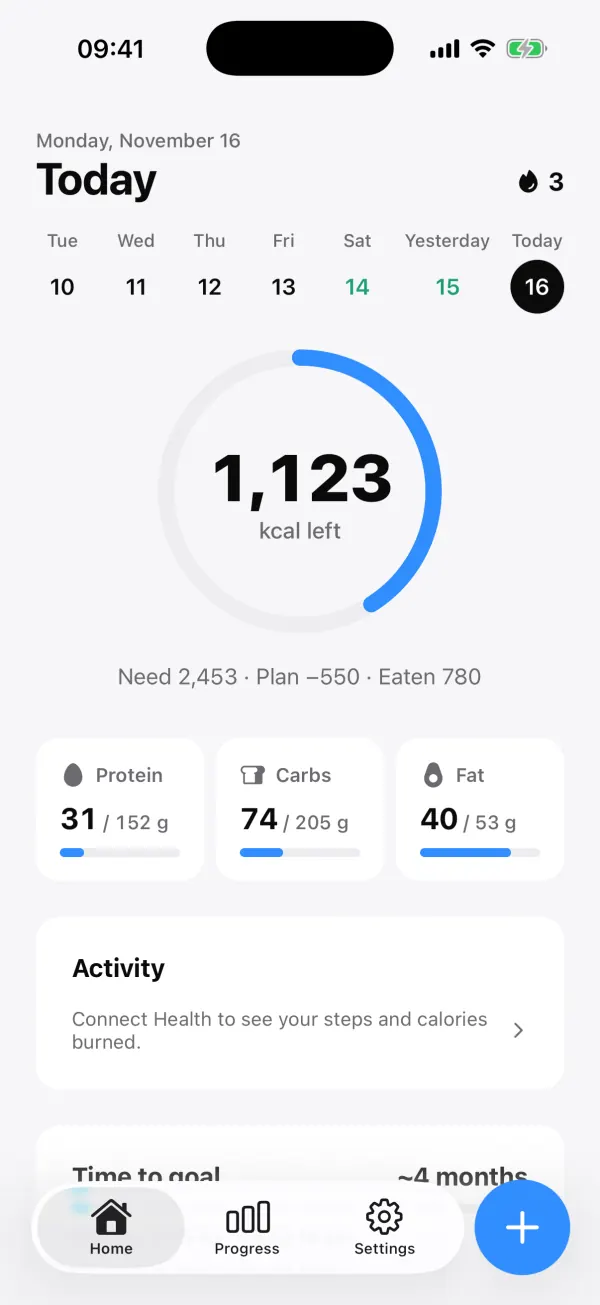
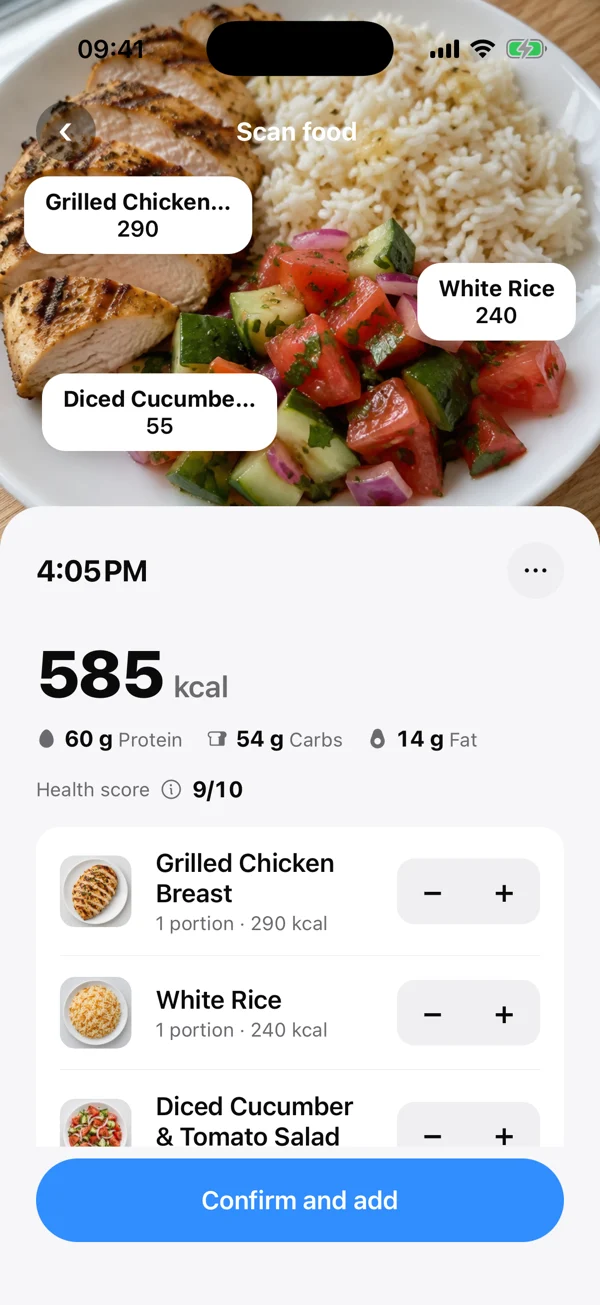
Snap a photo of your plate and get calories and macros in your log in seconds.