

































OMAD (one meal a day): does it work?
This article is general information, not medical advice. Talk to your doctor or a registered dietitian before changing your diet, especially if you have a health condition, take medication, or are pregnant or breastfeeding. Disclosure: Kalomo AI makes a calorie-tracking app, which we mention at the end of this article.
The short answer
OMAD means eating all of your food for the day in a single meal and fasting the rest of the time. It can lead to weight loss if it lowers your total calories, but very few studies have tested it directly, and research on intermittent fasting overall shows it works about as well as ordinary calorie cutting, not better. Hunger is the main hurdle, and it isn't safe for everyone.
What OMAD is and how it works
OMAD (“one meal a day”) is the most compressed version of time-restricted eating. Instead of an 8-hour eating window like 16:8, you eat once, usually within an hour or a few hours, and stick to zero-calorie drinks such as water, black coffee or plain tea the rest of the day.
There's no special metabolic trick here. Most people simply find it hard to eat a full day's worth of food in one sitting, so they end up in a calorie deficit. That matches the bigger picture: Harvard's review of intermittent fasting found that, in trials comparing fasting with continuous calorie restriction, weight loss and body composition changes weren't significantly different (Harvard T.H. Chan).
What the evidence says
Research on OMAD specifically is thin. The study most often cited is a small 2007 crossover trial in the American Journal of Clinical Nutrition. Fifteen normal-weight adults, aged 40–50, spent eight weeks eating enough to maintain their weight either as three meals or as one meal in a 4-hour early-evening window. On one meal a day they lost a little weight and fat mass, but hunger and the desire to eat were significantly higher, and they didn't adapt over time. Blood pressure, total cholesterol and LDL cholesterol also came out higher on the one-meal diet, though still within normal ranges. The authors flagged the small sample and short duration as real limits (Stote et al., 2007).
For intermittent fasting as a whole, a 2025 network meta-analysis of 99 randomized trials in The BMJ found that fasting approaches and traditional calorie-restricted diets produced similar weight loss, and both beat unrestricted eating. Most of the trials lasted under 24 weeks, so long-term effects remain unclear (Harvard T.H. Chan, 2025).
Bottom line: OMAD is one way to eat less, but there's no solid evidence that squeezing food into a single meal beats other ways of creating the same deficit.
How to try it, if it's right for you
If you're healthy and have checked with your doctor, easing in tends to go better than jumping straight to one meal:
- Start with a wider window, like 16:8, and narrow it gradually only if it feels manageable.
- Keep your meal at a consistent time. Eating very late can worsen reflux or disrupt sleep (Harvard T.H. Chan).
- Build the meal around protein, vegetables, beans or whole grains, and healthy fats. What's on the plate matters more than the clock.
- Drink plenty of water. Fasting can upset electrolyte balance, which can affect heart rhythm (Cleveland Clinic).
- Stop and talk to a health professional if you get dizzy, feel your heart racing, feel unusually weak, or notice binge eating.
Pros and cons
Pros: The rule is simple and there's less meal planning. Cutting out snacking lowers total calories for some people. Harvard notes that people who already eat only one or two meals a day may find fasting schedules easier to stick with.
Cons: Hunger can be intense and, in the OMAD trial, it didn't fade. Long stretches without food can lead to overeating when you do eat and to a stronger preoccupation with food. Getting enough protein, fiber, vitamins and minerals into one meal is hard. It also clashes with family meals and social eating, and Harvard points out that parents skipping meals may shape their kids' eating habits.
Who should not do OMAD
Harvard and Cleveland Clinic both list groups who should avoid fasting regimens:
- People who are pregnant or breastfeeding.
- Children and teens who are still growing.
- People with diabetes, especially anyone using insulin or other glucose-lowering medication.
- People taking medications that need to be taken with food.
- Anyone with a history of an eating disorder such as anorexia or bulimia.
- People with heart disease, kidney disease or another chronic condition, and anyone taking blood pressure medication, should talk to their doctor before trying any fasting plan.
How OMAD relates to calories and macros
OMAD tells you when to eat, not what or how much. In the 2007 trial, when people ate their full maintenance calories in one meal, the weight difference between the two periods was only about 1.4 kg (Stote et al., 2007). Fill that one meal with fast food and dessert and you can easily match or exceed your usual intake.
Aim for a meal with a solid protein source (fish, poultry, eggs, beans, Greek yogurt), plenty of vegetables for fiber, and some whole grains or starchy vegetables. Our calorie guide can help you estimate what you need and what your plate adds up to.
So, does OMAD work?
It can, to the extent that it helps you eat fewer calories. But you can create the same deficit across three meals, and the evidence doesn't show a meaningful advantage for one meal. It's hard to sustain, long-term safety data are lacking, and it's risky for some groups. If you want a fasting-style approach, a wider eating window is usually a more realistic place to start.
A sample day
On OMAD, the whole day's food fits on one table. This example uses dishes from our database; together they come to roughly 1,100 kcal, which may be well below what many adults need in a day.
- MainBaked salmon1 fillet (170 g), about 466 kcal and 43 g protein.466 kcal1 fillet
- SideBaked potato1 potato (200 g), about 250 kcal with 4 g fiber.250 kcal1 potato
- GreensCollard greens1 cup (150 g), about 109 kcal with 4 g fiber.109 kcal1 cup
- SaladCaesar salad1 bowl (150 g), about 278 kcal; most of it from the dressing.278 kcal1 bowl
Frequently asked questions
Can I drink coffee or tea while doing OMAD?
Generally yes, as long as they have no calories: water, black coffee and plain tea. Sugar, milk or cream break the fast. Stay well hydrated, since fasting can affect electrolyte balance (Cleveland Clinic).
Is OMAD better than 16:8?
There's no good evidence that it is. Studies comparing fasting schedules with plain calorie restriction find similar weight loss; total calories and whether you can keep it up matter most (Harvard T.H. Chan, 2025).
Will eating one meal a day make me lose muscle?
In the eight-week trial with normal-weight adults, fat-free mass didn't change significantly, but the study was small and short (Stote et al., 2007). Eating enough protein and staying active are the best ways to protect muscle over time.
Do I have to do OMAD every day?
No. Some people use it only a few days a week. Either way, if you have a chronic condition, take regular medication or have a history of disordered eating, check with your doctor first.
Sources
- A controlled trial of reduced meal frequency without caloric restriction in healthy, normal-weight, middle-aged adults — American Journal of Clinical Nutrition (PMC/NIH)
- Diet Review: Intermittent Fasting for Weight Loss — Harvard T.H. Chan School of Public Health – The Nutrition Source
- Intermittent fasting may be effective for weight loss, cardiometabolic health — Harvard T.H. Chan School of Public Health
- Fasting: How Does It Affect Your Heart and Blood Pressure? — Cleveland Clinic
Related articles
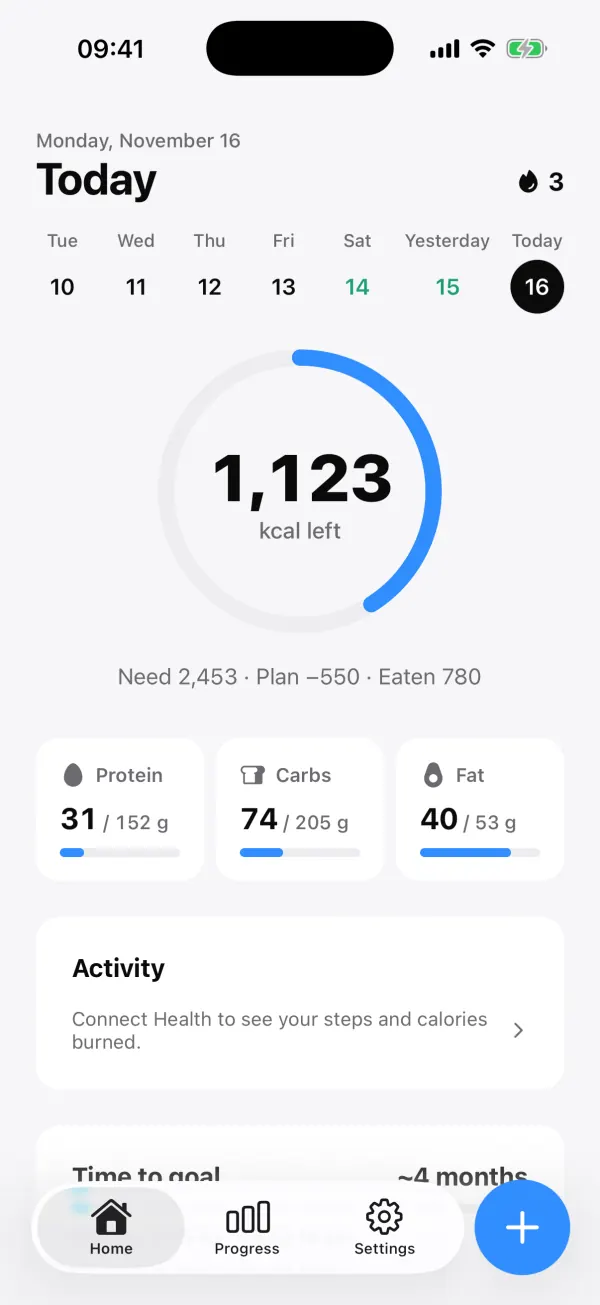
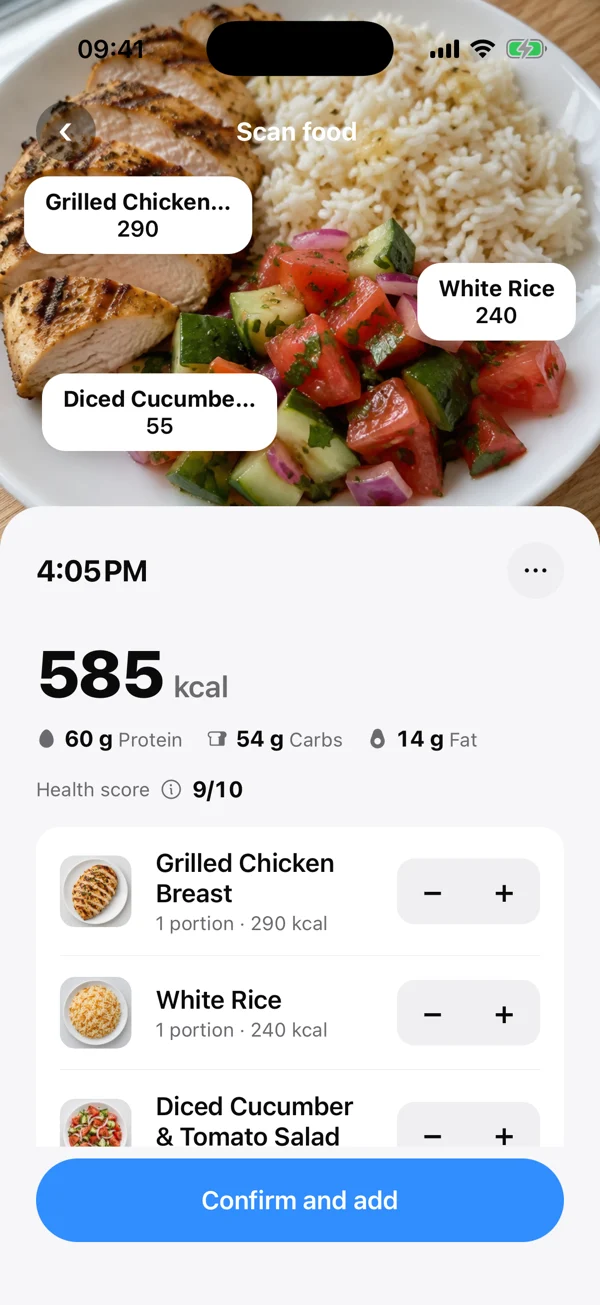
Track your plan with Kalomo AI
Snap a photo of your plate and get calories and macros in your log in seconds.