

































What is carb cycling?
This article is general information, not medical advice. Talk to your doctor or a registered dietitian before changing your diet, especially if you have a health condition, take medication, or are pregnant or breastfeeding. Disclosure: Kalomo AI makes a calorie-tracking app, which we mention at the end of this article.
The short answer
Carb cycling means eating more carbohydrates on hard training days and fewer on rest or light days. It comes from sports nutrition, and there's little good evidence that it helps weight loss more than any other approach with the same calories. It can make sense if your training load swings a lot from day to day; for most casual exercisers, a steady, balanced diet does the same job with less effort.
What carb cycling is
Carb cycling alternates higher-carb and lower-carb days. It started as a way for athletes to prepare for competition and was later marketed for fat loss (Harvard Health Publishing).
One thing to know up front: there's no standard definition. Plans vary widely, especially in how many carbs they allow on low days (Harvard Health Publishing). In sports science, related strategies are studied under the label “periodized nutrition,” which matches food intake to training goals (Jeukendrup, 2017).
The theory behind it
Your body stores carbohydrate as glycogen in muscle and liver and draws on it during intense exercise. High-carb days are meant to top up those stores before tough sessions; low-carb days are meant to nudge the body toward burning more fat (Harvard Health Publishing).
In athletes, “train low” studies have shown some favorable changes at the cellular level, but few have been able to show a payoff in actual performance (Jeukendrup, 2017). The idea is plausible, but the real-world benefit hasn't been shown.
How to do it
A typical pattern is one or two high-carb days a week, timed around your hardest workouts, with lower carbs the rest of the week (Harvard Health Publishing). One version described by a Cleveland Clinic sports dietitian runs on five days: three low days at about 100–125 g of carbs, then two high days at 175–275 g paired with more activity. A simpler version just adds carbs on heavy training days and eases off on light ones (Cleveland Clinic).
- Start with your training calendar. Mark which days are genuinely hard. If every day looks about the same, there's not much to cycle.
- Keep protein steady. Muscle repair continues on rest days, so adequate protein comes first every day (Harvard Health Publishing).
- Make high days high-quality. Choose whole grains, oatmeal, potatoes with the skin, fruit, beans and vegetables, and go easy on white bread and sweets (Cleveland Clinic).
- Don't go too low on low days. Cutting carbs hard can leave you short on fiber. Fatigue, brain fog and sluggish workouts are signs you need more (Harvard Health Publishing).
- Track the week, not the day. Look up carbs and calories for everyday dishes in our calorie guide.
Where calories and macros come in
Weight change still comes down to energy balance: eat and drink fewer calories than you use and your body taps stored fat (NHS). Carb cycling doesn't change that math. It only reshuffles when the carbs show up.
A meta-analysis of 32 controlled feeding studies that swapped carbs for fat while holding calories constant found no fat-loss advantage for lower carbs; the tiny difference actually favored lower-fat diets (Hall and Guo, 2017). Harvard Health notes that carb cycling appears to follow the same pattern (Harvard Health Publishing).
The type of carb matters more than the amount. Whole grains, vegetables, fruit and beans beat white bread, pastries and other refined foods (Harvard T.H. Chan).
Pros and cons
Pros: Matching fuel to training load is a sensible idea for athletes. Early findings suggest carb cycling combined with structured, high-intensity exercise may improve body composition more than diet alone (Harvard Health Publishing), and there's nothing dangerous about it in the short term for healthy people (Cleveland Clinic).
Cons: It takes a lot of planning, which doesn't suit everyone (Harvard Health Publishing). You may see the scale jump after high-carb days because muscles store the extra carbohydrate, which can be discouraging if you don't expect it (Cleveland Clinic). Low days also risk shortchanging fiber.
Who should skip it or check with a doctor first
Shifting carbs around day to day isn't a good fit for everyone. Hold off and get advice first if you're in one of these groups:
- People with diabetes, especially on insulin or other glucose-lowering drugs. Swinging carb intake needs to line up with your treatment plan; work it out with your care team.
- Pregnant or breastfeeding women. This isn't the time for experimental eating patterns; stick with regular, balanced meals under your clinician's guidance.
- Anyone with a history of disordered eating. Strict day-by-day rules and gram tracking can be a trigger.
- Children and teens. Growing bodies need consistent nutrition planned with a professional.
- Casual exercisers. It isn't harmful, but the sports dietitian interviewed by Cleveland Clinic says it's meant for serious endurance athletes, not casual fitness fans (Cleveland Clinic).
What the evidence says
Put simply, the evidence is thin. Most research involves competitive athletes, high-quality trials are scarce, and Harvard describes the benefits as promising but mostly unproven (Harvard Health Publishing). Cleveland Clinic is blunter: it says carb cycling isn't a weight-loss program at all (Cleveland Clinic).
Even within sports nutrition, some periodized-nutrition methods have solid support while others remain theories waiting to be tested (Jeukendrup, 2017). If your goal is weight loss, a calorie deficit you can keep up matters far more than which days carry the carbs.
A sample day
A high-carb training day made from dishes on our site, using their standard portions. On a low-carb day, keep the oatmeal smaller and the chicken the same, and swap the baked potato for collard greens.
- BreakfastOatmeal1 bowl, about 154 kcal and 27 g of carbs from whole grains.154 kcal1 bowl
- LunchTurkey sandwich1 sandwich, about 428 kcal, 43 g of carbs and 28 g of protein.428 kcal1 sandwich
- Post-workout dinnerGrilled chicken breast1 breast, about 299 kcal and 50 g of protein; the same on high and low days.299 kcal1 breast
- Dinner sideBaked potato1 potato, about 250 kcal and 40 g of carbs; eat the skin for extra fiber.250 kcal1 potato
Frequently asked questions
Does carb cycling help you lose weight?
You'll lose weight if you're in a calorie deficit, but there's no strong evidence that cycling carbs adds anything on top (Harvard Health Publishing). With calories held equal, cutting carbs doesn't meaningfully boost fat loss (Hall and Guo, 2017).
Why did I gain weight after a high-carb day?
Your muscles store extra carbohydrate as glycogen, and that shows up on the scale (Cleveland Clinic). It isn't fat gain; your weekly average tells you more than any single morning.
How many carbs should I eat on a low day?
There's no standard number, and plans differ a lot (Harvard Health Publishing). One Cleveland Clinic example uses about 100–125 g on low days (Cleveland Clinic). If you feel wiped out or your workouts tank, you've likely gone too low.
Is carb cycling the same as keto?
No. High-carb days are built into carb cycling; the point is to match carbs to training rather than keep them very low all the time (Harvard Health Publishing).
Sources
- Carb cycling: What is it, and does it work? — Harvard Health Publishing
- What Is Carb Cycling? — Cleveland Clinic
- Obesity Energetics: Body Weight Regulation and the Effects of Diet Composition (Gastroenterology, 2017) — PMC / NCBI
- Periodized Nutrition for Athletes (Sports Medicine, 2017) — PMC / NCBI
- Carbohydrates — Harvard T.H. Chan School of Public Health, The Nutrition Source
- Understanding calories — NHS
Related articles
Track your plan with Kalomo AI
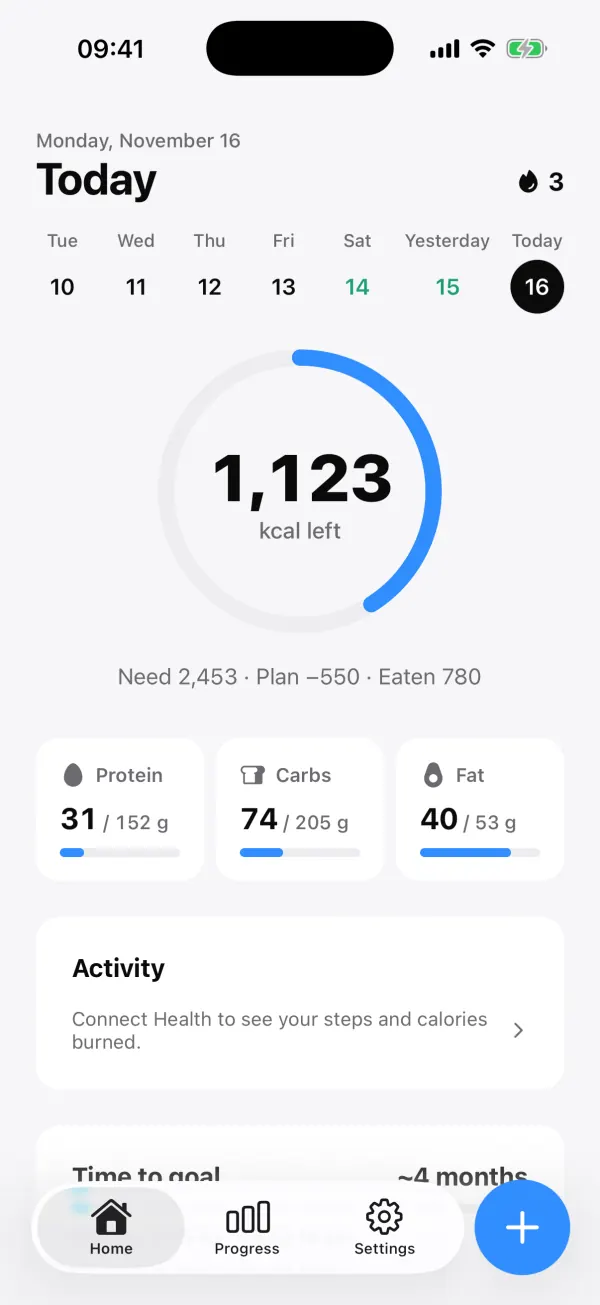
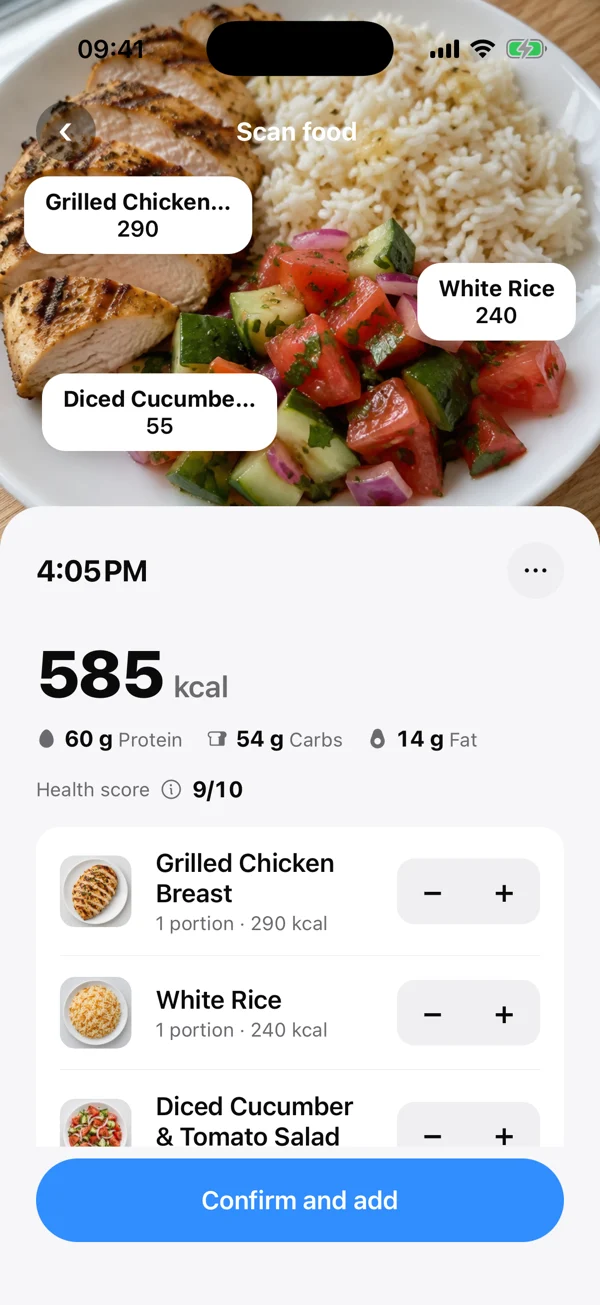
Snap a photo of your plate and get calories and macros in your log in seconds.